Raise HECK organized a session at 26NTC, How to Lead Through Tech Change, and we were so fortunate to have three of our clients agree to join us. The speakers were:
- Lea Wehrle-Garsh, International Mountain Bicycling Association
- Freeda Brook, The News Literacy Project
- Mallory Gay, USA for UNHCR
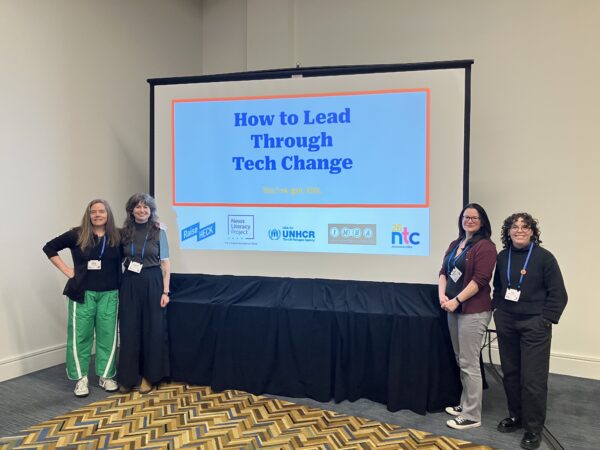
Each panelist described the tech change project they had worked on or were currently in the middle of, how they functioned as leaders during and after their projects, and what they learned. I’m going to highlight some key takeaways from their comments and the Q&A.
- Assessments build buy-in: Before embarking on their tech change, each organization worked with Raise HECK on an assessment. As much as the assessment led them to a technology answer, it also served a crucial role for people: to build awareness and understanding among staff about the need for the tech change. This was crucial, because people who aren’t informed or consulted about tech change can turn into key sources of resistance.
- Collaborative decisions: Lea shared that she framed decisions around shared organizational goals. It’s not about what tech is best for individual people or departments, it’s about what tech will help IMBA build more trails close to home. IMBA’s organizational culture leans toward collaborative decision-making, so this helped decisions get made efficiently and also feel good to the stakeholders.
- Theory of learning: Freeda shared two models of experiential learning and how the overlap of actions and feelings at crucial points means people can get stuck in confusion, frustration, and doubt. To get unstuck, a leader who listens and makes a plan to address the challenges (whether immediately or down the road) goes a long way and keeps the project moving. Through listening and action, Freeda was able to help her colleagues break through confusion with a tech tool and move toward confidence, achievement, and full adoption.
- Clear communication and compassion: Mallory shared lessons learned that addressing tradeoffs and consequences directly, even if those tradeoffs are uncomfortable, can prevent resistance from festering. She also shared that USA for UNHCR has introduced Project Retrospectives to break down what went well and what didn’t. I was especially struck by the compassion for colleagues that is inherent in this practice.
Leadership takes many forms and is irrespective of title. Great leaders can be individual contributors, managers, directors, or executives. Most often great leaders are great at listening, learning, and turning what they learned into action. Our blog post 7 Goals for Leaders During Tech Change lists some of these qualities.
Joint ownership of success is inherent in great leadership, and IMBA, NLP, and U4U have built a culture of shared success from their projects.
I also want to tell you about the missions of each of these organizations.
IMBA’s mission is to create, enhance, and protect great places to ride mountain bikes. They focus on more trails, close to home. Their vision is that everyone has access to great trails. They partner with local organizations to make sure that access to trails is equitable. Community, wellness, and stewardship for the natural world are some of IMBA’s core values.
During our project, this clicked for me one day when after work I headed out to meet a friend to play tennis on public courts. We talked about meeting up at the middle school, but that if the courts were full we’d go to one of the three local parks instead. It’s the same with mountain biking and any recreation–infrastructure close to home is important. Recreation, exercise, and time in nature are fundamental to improving the human experience. Access matters.
NLP advances the development and teaching of news literacy in K-12 education. Their vision is that all students in the United States are skilled in news literacy before they graduate from high school, preparing them to think critically and independently as active participants in society.
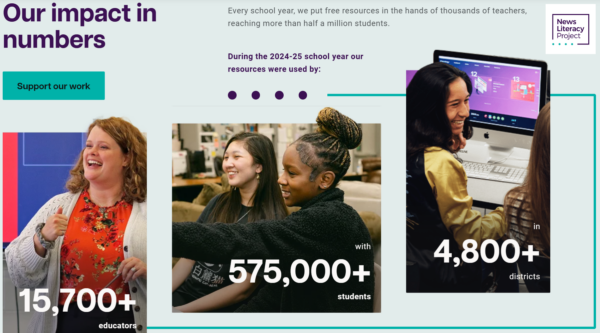
My own K-12 education was foundational. We learned about yellow journalism, which had its heyday in the 1890s, but the internet wasn’t a thing in 1890 or even in 1983. The advent of the internet and social media has enabled misinformation and outright lies to spread like wildfire and cause massive harm. News literacy is a must, because the consequences of news illiteracy are dire.
USA for UNHCR protects and supports refugees by mobilizing resources, elevating awareness, and driving action through a network of engaged supporters. Their vision is a world where every person forced to flee can build a better future.
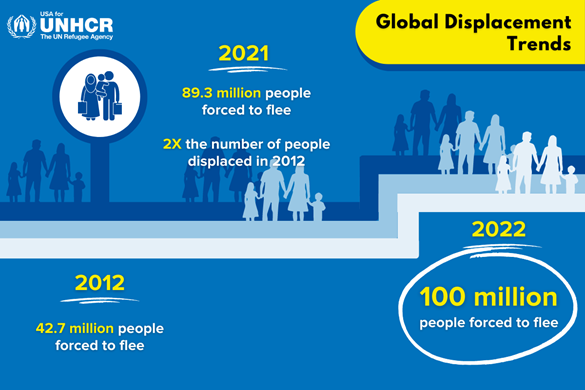
Most people don’t want to leave their homes, but more and more people are forced to do so due to violence, climate change, war, famine, and and increasingly long list of reasons why the world isn’t a safe place for everyone everywhere. Helping people who need help and empowering them to build a better future is selfless, impactful work.
A side note, I’m reminded of the sociopolitical commentary from The Good Place when, when confronted with the bureaucracy of The Good Place, Jason says “We’re refugees. What kind of messed up place would turn away refugees?”
Charlotte and I want to extend another huge thank you to Lea, Freeda, and Mallory for joining us at NTC. We are so thankful to work with you and your organizations to support your missions. You three are cool as heck and we value you as clients, people, and leaders. Working with you and your organizations has made us better in every way.
Questions? Comments? I’d love to hear your thoughts. Here’s my LinkedIn thread about NTC.
Read the other NTC 2026 Recaps from Raise HECK:
NTC 2026 Recap Part 1: Reflections on NTC and the Value of Community
NTC 2026 Recap Part 2: What I Learned at Sessions and Keynotes